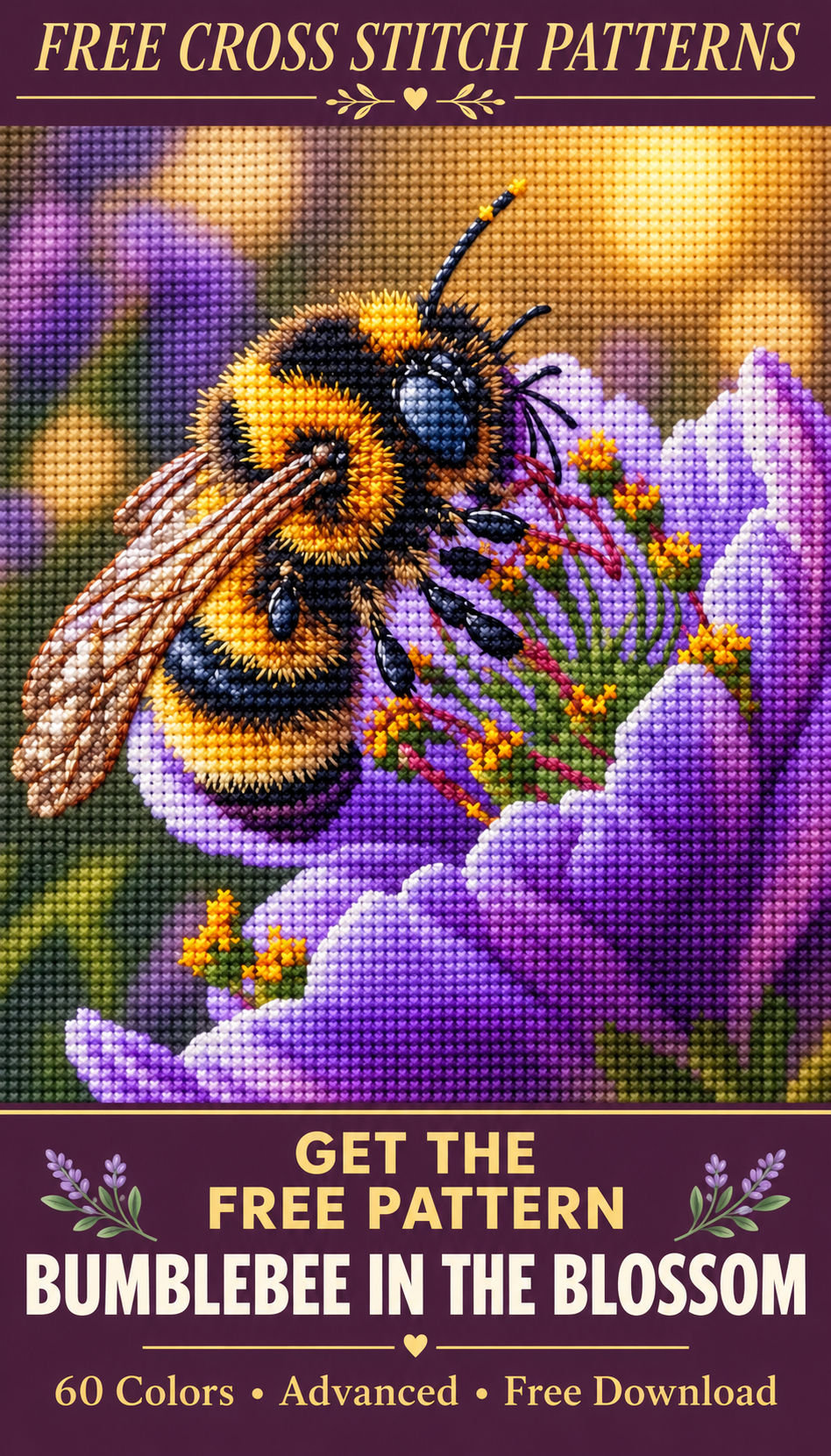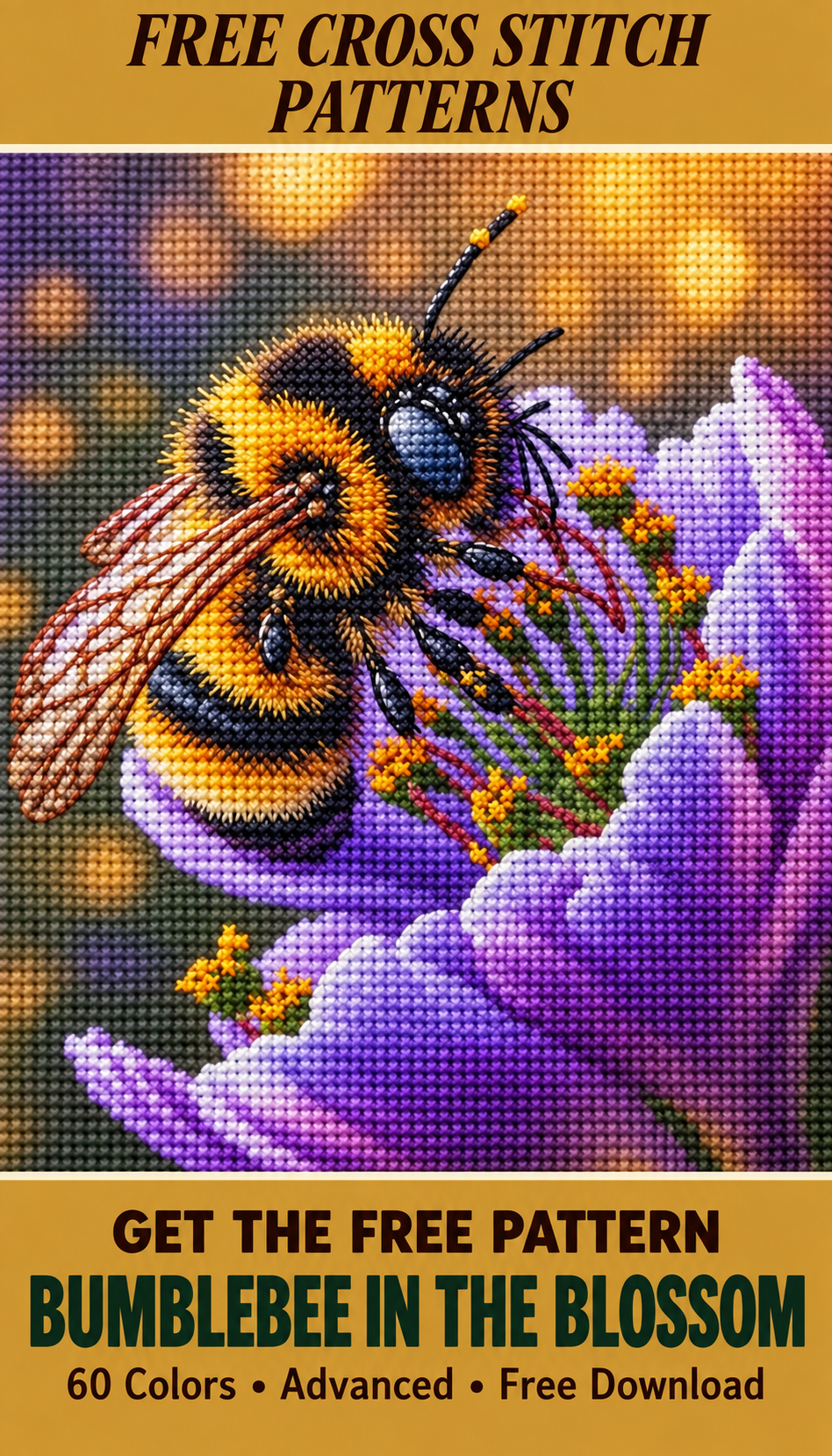
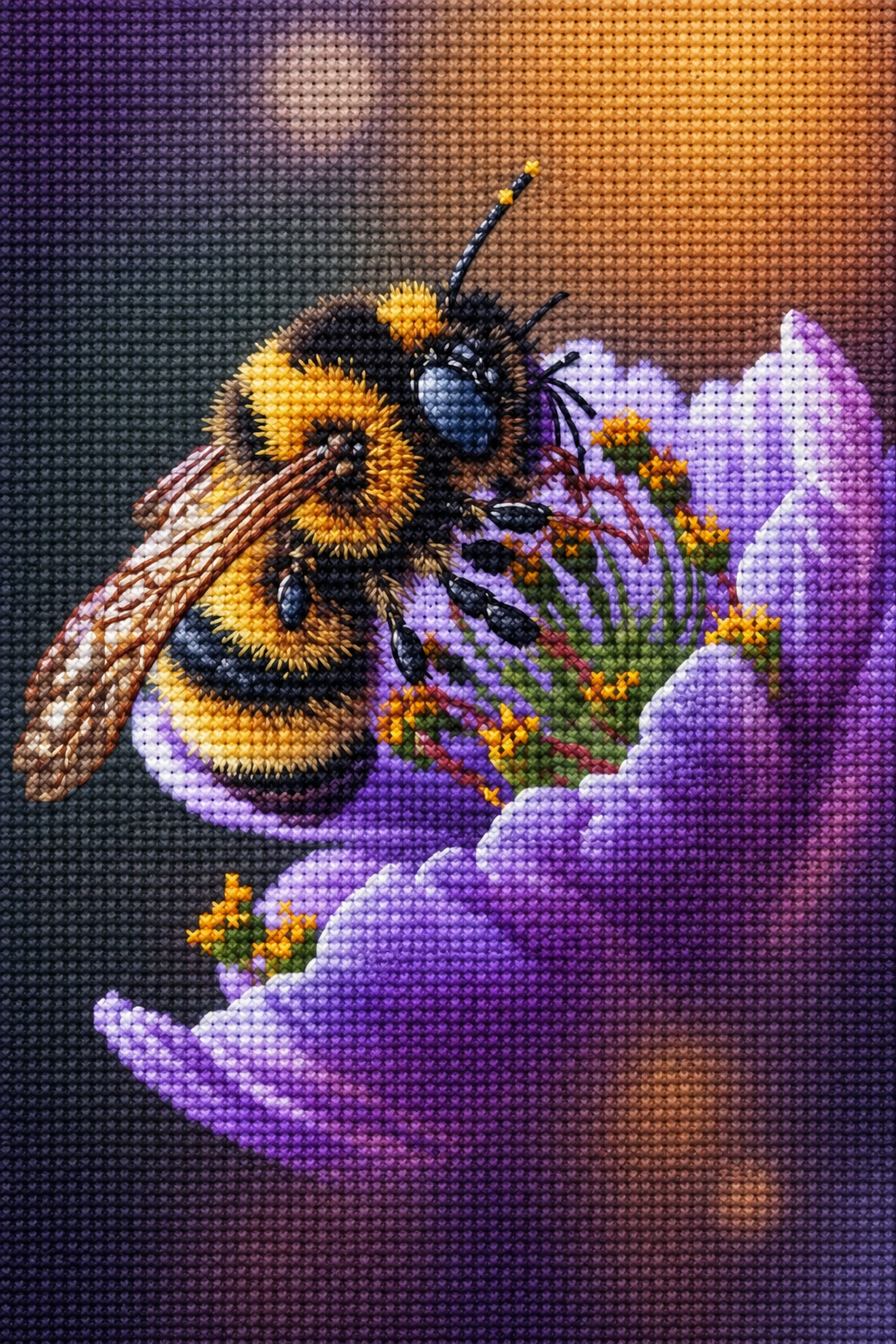
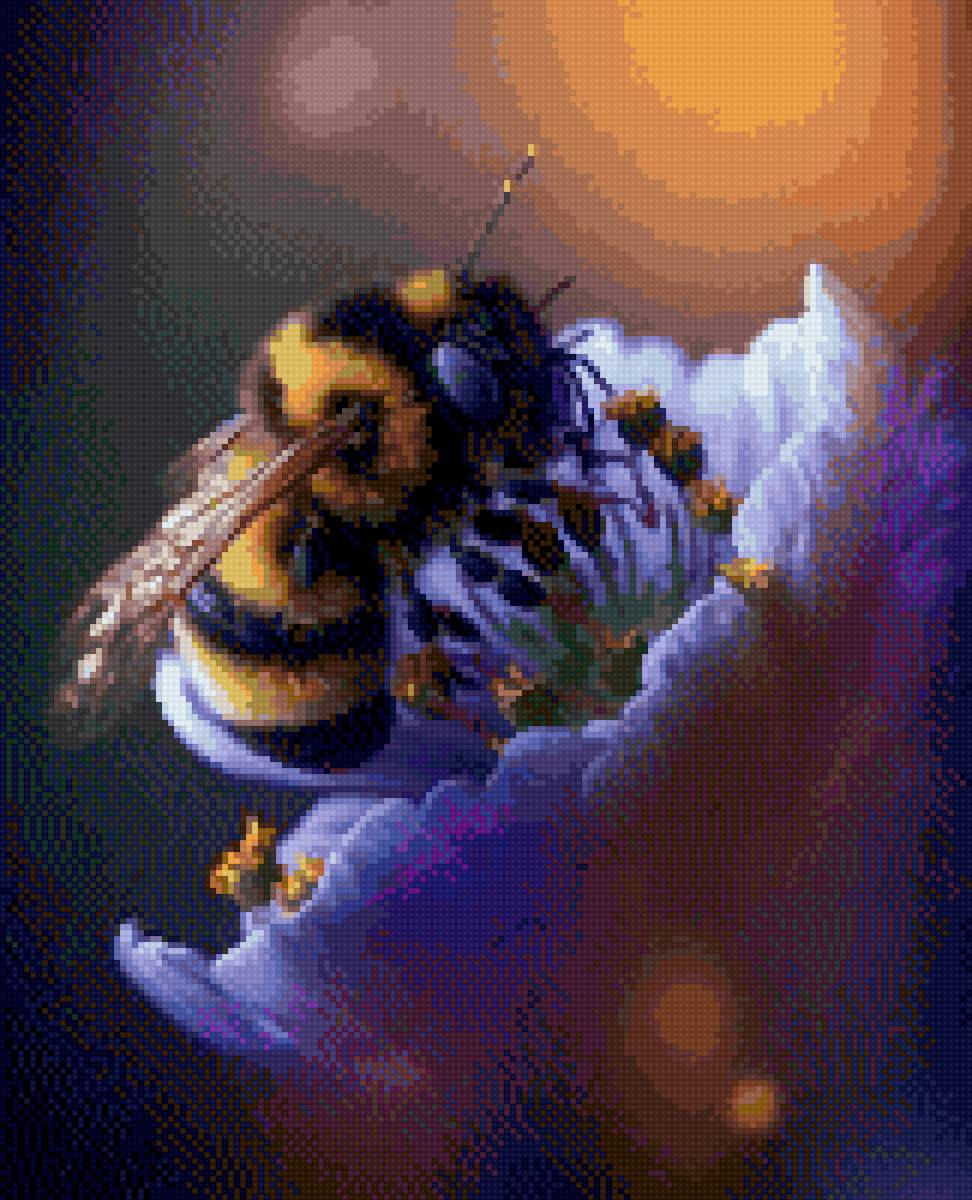
This one is pure golden-hour magic — a fuzzy bumblebee caught mid-forage on a lavender-blue blossom, wrapped in soft bokeh light that glows amber in the background. It’s photorealistic cross stitch at its most ambitious: every fuzzy stripe on the bee’s body and every translucent wing vein is built from subtly shifting thread blends, which is exactly what gives it that soft-focus, almost-photographic depth.
Below you’ll find the color key, a preview of the chart, and free downloads for both the full-color pattern and the black & white symbol version — plus some notes on working with blended threads, since more than half this palette uses them.
Table of Contents

Pattern At a Glance
- DifficultyAdvanced (blended threads)
- Fabric14-count Aida (recommended)
- Stitch Count162 × 200 stitches
- Finished Size≈11.6″ × 14.3″ on 14-count
- Colors60 DMC colors (24 solid + 36 blends)
- Estimated Time35–45 hours
Pattern Preview
Here’s the finished design — full coverage stitching from edge to edge, with that dreamy bokeh background built almost entirely out of blended thread colors.
Materials / Supplies
Both the full-color chart and the black & white symbol chart are included in the free download. This is a full-coverage design — every single square on the 162 × 200 grid is stitched, so there’s no blank background fabric showing through.
- 14-count Aida cloth, at least 16″ × 18″ (gives a comfortable border around the 162 × 200 stitch design)
- DMC embroidery floss in all 24 solid colors listed in the key below
- A second set of floss for the 36 blended colors — each blend uses one strand of two different DMC numbers combined in the needle (see Tips below)
- Size 24–26 tapestry needle
- Embroidery hoop or frame, sized to your fabric
- Small scissors and a floss organizer or bobbins (essential with 60 colors — see tips)
- Good lighting or a magnifier lamp — many of the blended blues and purples sit close in tone
Tips for This Pattern
- Understand the blends first. Any key entry starting with “BLEND” means you stitch with one strand of each listed DMC color threaded together, not two strands of the same color. For example, “BLEND 803 + 939” is one strand of 803 and one strand of 939 combined in your needle.
- Sort solids and blends separately. With 60 total colors, keep your 24 solid-color bobbins in one box and your 36 blend combinations in another — it’s much easier to find what you need mid-stitch.
- Pre-combine your blend strands. Cutting and pairing blend threads in batches before you start (rather than one at a time as you go) saves a huge amount of time over a project this size.
- Work in sections. Start with the bee’s body, since it has the highest-contrast, most solid-color-heavy areas, then move into the softer blended background once your eye is calibrated to the palette.
- Start from the center and work outward so the design lands centered on your fabric with even margins.
- Expect this one to take longer than a typical 60-color chart — full coverage plus blended threads both add real time compared to a design with open background.
Color & Symbol Guide
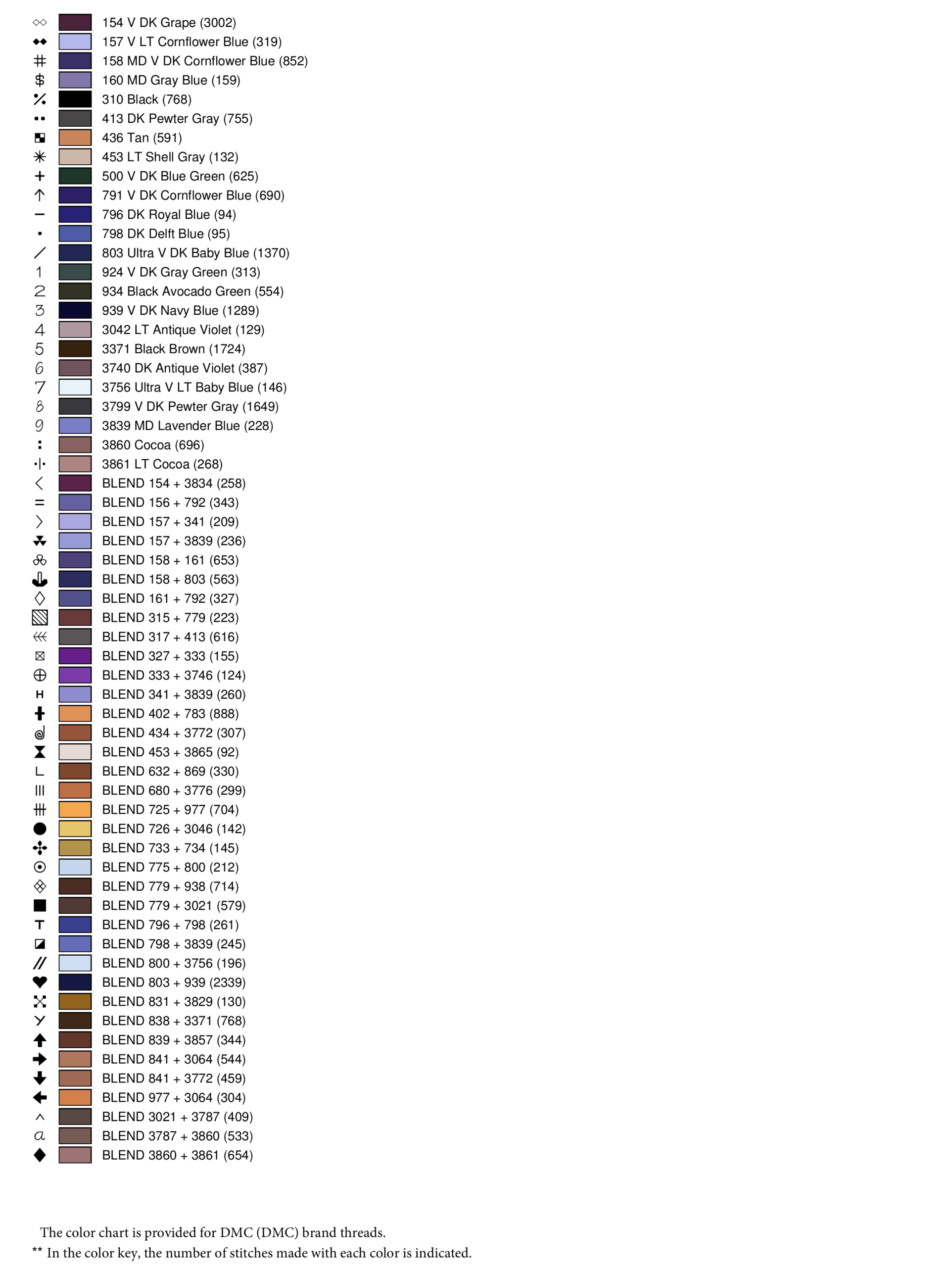
Color chart shown is for DMC brand thread. The number next to each color is the total stitch count for that color in the pattern. Entries marked “BLEND” use one strand each of the two listed DMC numbers, combined in the needle.
Free Downloads
🎨 Full Color Pattern
Includes the full-color charted pages, exactly as shown in the preview above.
Watch Ad to Unlock Download⚫⚪ Black & White Pattern
Same design charted with symbols instead of color blocks — easier on ink and often easier to follow at the hoop.
Watch Ad to Unlock DownloadFAQ
What does “BLEND” mean in the color key?
A blend combines one strand of two different DMC colors in the same needle instead of two strands of a single color. It’s what gives this design its soft, photographic shading — a technique sometimes called “tweeding.” It takes a little getting used to, but it’s just regular cross stitch once the strands are combined.
What fabric should I use for this pattern?
14-count Aida is the easiest starting point and gives a finished piece of about 11.6″ × 14.3″. On 16-count that comes down to roughly 10.1″ × 12.5″, and on 18-count around 9.0″ × 11.1″. The stitch count itself — 162 × 200 — stays the same regardless of fabric; only the finished size changes.
How long does this pattern take to stitch?
Budget 35–45 hours. It runs longer than a typical 60-color chart for two reasons: it’s full coverage (every square is stitched, no open background), and about 60% of the colors are blends that take extra prep time to pair and re-thread.
Is this pattern good for beginners?
It’s rated Advanced, mainly because of the blended threads and full coverage rather than stitch difficulty itself — it’s worked entirely in full cross stitch. If you’ve completed at least one smaller project and are comfortable reading a chart, this is a reasonable stretch project; if you’ve never blended threads before, it’s worth practicing on some scrap fabric first.
What’s the difference between the color and black & white versions?
The color version shows each square filled with its actual thread color, which is especially helpful here for telling the many close blended shades apart at a glance. The black & white version uses symbols instead, referenced against the same key — better for printing at home and easier to see clearly at the hoop.
Conclusion
This is a genuine labor of love — 60 colors, more than half of them blends, and full coverage from corner to corner. But that’s also exactly why the finished piece looks less like a cross stitch and more like a painting. Take it slow, keep your blends organized, and enjoy watching that bokeh glow build up stitch by stitch.
Grab your free copy above, and if you make one, we’d love to see it. Happy stitching!
Related Patterns
📌 Pin one of these to save the pattern!